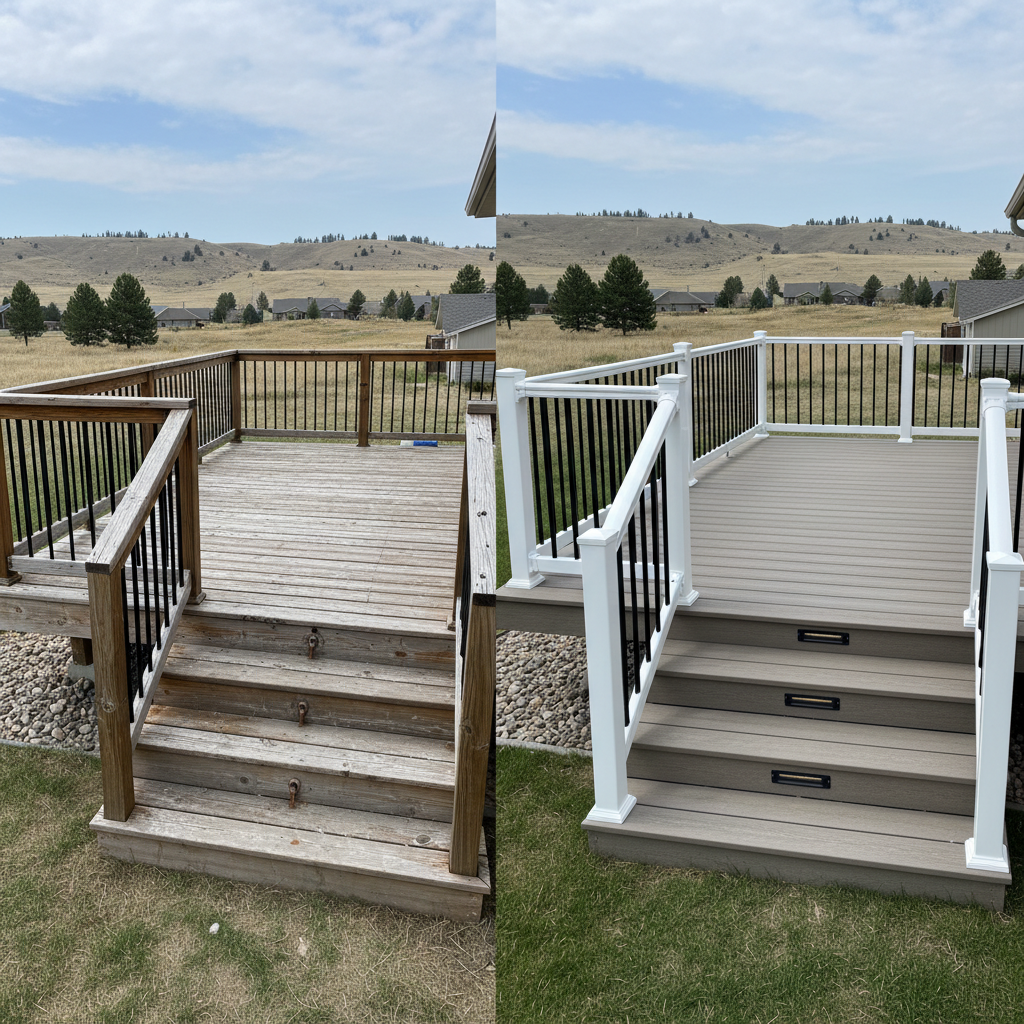
Capped vs. Uncapped Trex: What's the Real Story?
So, you're thinking about Trex for your new deck here in Billings. Good call, honestly. It's a fantastic material, especially with our wild Montana weather. But as you start digging into things, you'll probably hear terms like 'capped' and 'uncapped' composite. What in the world do those even mean for you, the homeowner, and your wallet? Let's get into it, because there's a pretty big difference in how your deck will look and hold up over time.
First things first, Trex is a composite material. That means it's a blend of recycled wood fibers and plastic. It's built to be tougher and easier to care for than traditional wood. That's the basic idea. Now, where 'capped' and 'uncapped' come into play is all about how that core composite material gets its protection.
Uncapped Trex: The Original Composite
Uncapped composite, like the old Trex Accents line (which, let's be real, isn't really sold much anymore, but it's good for understanding the technology), was basically just that wood-plastic mix all the way through. Picture a solid piece of composite lumber. It was a huge improvement over wood when it came to resisting rot and insects, and you never had to stain or seal it. That was a big win, no doubt.
- Cost: Generally, uncapped was the cheapest composite option. You'd save some cash upfront.
- Durability: It was tough, absolutely. But because the wood fibers on the surface weren't fully sealed, it could still soak up some moisture. This meant it was prone to fading, staining (think grease or red wine – yikes!), and sometimes even mildew if you didn't clean it regularly. It wasn't exactly 'maintenance-free,' more like 'low-maintenance.'
- Maintenance: You'd still need to clean it pretty often with soap and water to keep it looking decent. If you got a really stubborn stain, it could be a bear to get out. Fading was also a real issue, especially with our intense sun here in Billings.
- Appearance: It looked good when it was new, but over time, it would weather and fade, much like wood does, but without the splintering or rotting. The color just wasn't as vibrant or consistent as what you see in newer materials.
Capped Trex: The Modern Standard
This is where most of the Trex products you find today fit in – lines like Trex Transcend, Trex Enhance, and Trex Select. Capped composite means the core composite board is wrapped on three or four sides with a super durable, high-performance polymer shell. Think of it like a protective shield around the important bits.
- Cost: This is where you'll notice a higher price tag. Capped composite costs more per linear foot than uncapped ever did. It's an investment, yes, but one that really pays off.
- Durability: This is the huge advantage. That polymer cap makes these boards incredibly resistant to fading, staining, scratching, and mildew. That cap is built to stand up to almost anything, including the harsh freeze-thaw cycles we get here in Montana. You won't see that chalky fade or those impossible stains.
- Maintenance: This is about as close to 'maintenance-free' as you're going to get with a deck. A simple hose-off and an occasional scrub with mild soap is usually all it takes. Spills? They wipe right up. You won't be spending your weekends scrubbing or power washing like a maniac.
- Appearance: Capped boards offer much richer, more consistent colors and often have really realistic wood grain patterns. They look fantastic and stay looking fantastic for years. The color stability is a massive selling point, in my opinion.
Which One Should You Choose for Your Billings Deck?
For homeowners in Billings, I'm going to give you my honest take: definitely go with capped composite.
I've seen it all over the years, from decks in the Rimrock area getting absolutely blasted by sun and wind, to those down by the Yellowstone River dealing with more moisture. Our climate here is just plain tough on outdoor materials. The intense UV radiation from our high-altitude sun, combined with big temperature swings and the occasional hail storm, means anything uncapped is going to show its age a lot faster.
While the initial cost of capped Trex is higher, the long-term benefits in durability, how well it keeps its looks, and especially the low maintenance are absolutely worth it. You'll spend less time cleaning and fretting about stains, and more time actually enjoying your deck. It holds its value better, too. When you're talking about a big investment like a new deck, you want it to last and look good for decades, not just a few years, right?
Here at Billings Deck Creations, we almost always recommend and install capped composite products because we know they'll stand up to whatever Montana throws at them. You'll be happier with it in the long run, and that's what truly matters most.