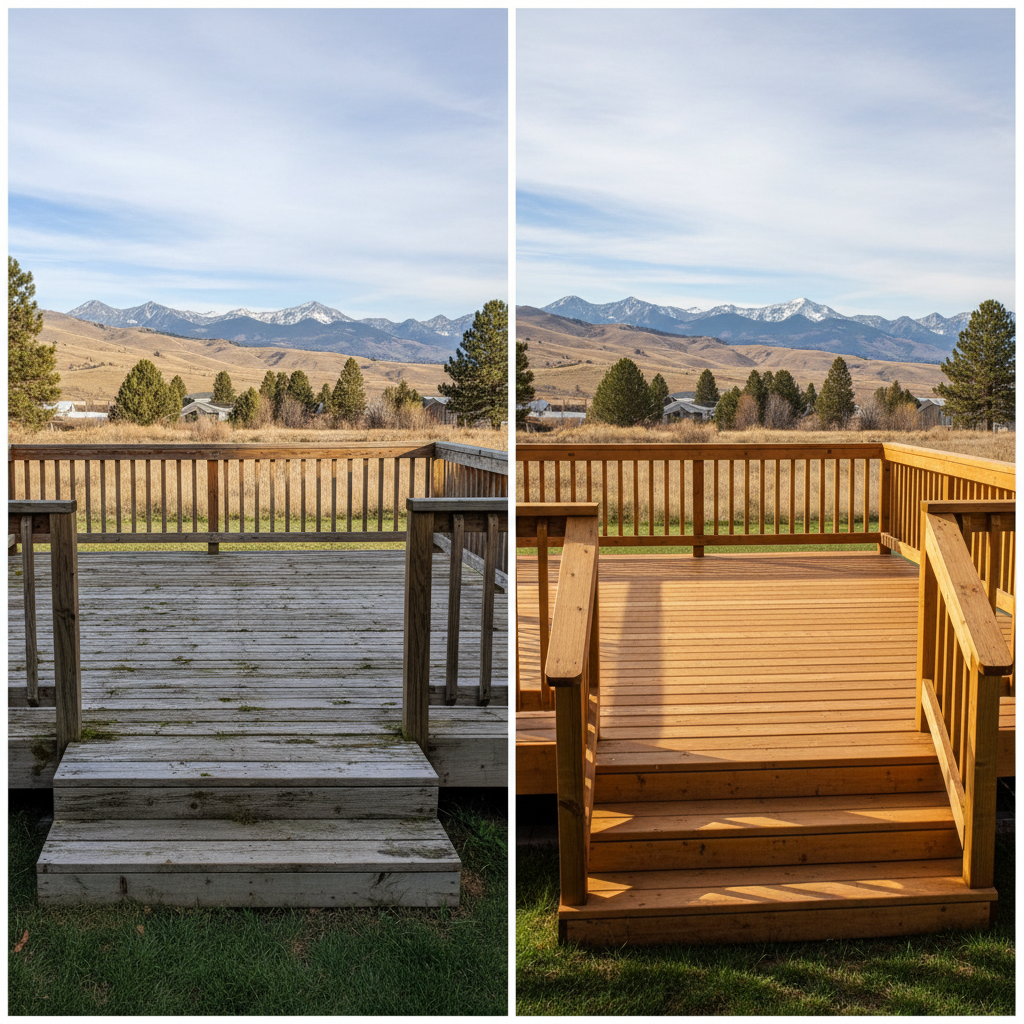
Deciding on the right lumber for a new outdoor project comes down to a few hard facts about what our local weather brings to Billings, MT. Here in Billings, we get everything from scorching July sunshine baking the Heights to freezing winter winds sweeping down off the Rims. When building a natural wood deck, homeowners are usually looking at two main contenders: standard pressure-treated lumber or Western Red Cedar. Billings Deck Creations has built plenty of both across Yellowstone County, and these materials behave entirely differently once they are exposed to our intense temperature swings and dry high-desert air.
The Cost Breakdown
Budget usually drives the ship for Deck Construction projects. Pressure-treated wood, which is usually southern yellow pine soaked with chemicals to keep rot and bugs at bay, is the clear winner on upfront price. It is affordable, widely available at local yards, and keeps the initial materials bill low for homeowners in Billings. Cedar costs more, and sometimes significantly more, depending on grade and market fluctuations. Homeowners pay a premium for a wood that looks richer and does not rely entirely on heavy chemical treatments to resist the elements.
Durability and Weather Performance
This is where things get interesting in Montana. Pressure-treated wood is structurally tough and handles heavy framing loads without blinking. But because it is often sold with high moisture content, it tends to warp, twist, and check as it dries out under our blazing summer sun. If you do not fasten it down tightly and keep up with maintenance, it will start moving after a couple of seasons. Cedar has natural oils that make it naturally resistant to decay and insects without needing chemical saturation. It is lighter and dimensionally more stable than pressure-treated pine, meaning it stays flatter and shrinks less as humidity drops. That said, cedar is softer, so it dings and scratches easier if you drag patio furniture around or have large dogs running across the boards.
Maintenance Realities
Neither option is a maintenance-free material. If someone tells you cedar does not need care, they have not watched it turn silver-gray under a Montana sky. Unsealed cedar will weather to a rustic gray patina over time. If you want to keep that warm, reddish-brown hue, you will be cleaning and staining it every couple of years. Pressure-treated wood demands even more attention. Because it holds moisture and absorbs punishment, you have to let it dry out fully after installation before applying a solid or semi-transparent stain. Skip the sealer, and you will be facing splintering boards and surface cracking sooner than you would like. Billings Deck Creations always tells homeowners to factor in your own tolerance for weekend chores before picking your material.
Our Local Recommendation
If you are watching every dollar and plan to stay on top of a regular staining schedule, pressure-treated lumber makes a solid substructure and a budget-friendly deck surface. But if you want a cleaner look, less warping right out of the gate, and natural weather resistance that ages gracefully on the Bench or out in the valley, cedar is worth the extra upfront investment. Billings Deck Creations provides Deck Construction services for homes in Billings, MT.